On the distance

Beyond the sunset on the west

Tag: Mexico

La Madre enterrada bajo las piedras

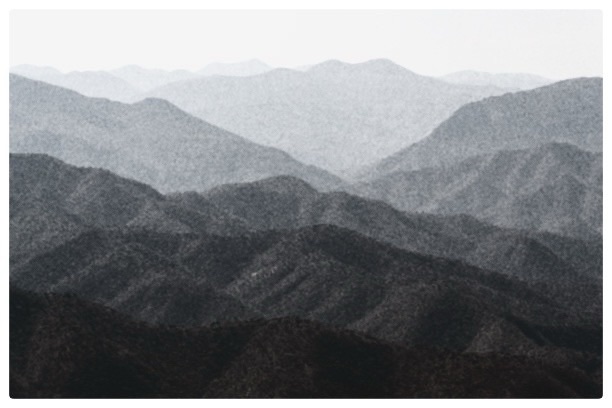
Sierra Madre Occidental , Coahuila México. 2014

Y fue antes del principio,

cuando aún el sol no sabía su camino,

que la Madre se alzó de entre la niebla.

Alta y callada, coronada de nieve,

cubrió la tierra con su manto de pinos.

De su seno brotaron los ríos,

y el canto del agua fue su primer rezo.

Las bestias bebieron de sus lágrimas,

y los hombres hallaron en sus laderas la palabra “hogar”.

Al caer la tarde,

su rostro se tiñe de rojo y de oro,

y los cielos se incendian con su belleza.

Así muestra su rostro a los mortales,

recordándoles que la hermosura también quema.

Ella amó a sus hijos.

Los alimentó con frutos, los cubrió con sombra,

los dejó dormir bajo su aliento fresco.

Pero ellos abrieron su carne buscando tesoros,

y le arrancaron las entrañas sin mirar al cielo.

Y aun así, ella no los maldijo.

Solo cerró los ojos y tembló.

Porque los hijos siempre quitan más de lo quedan.

Hubo un tiempo en que la llamaron Tonantzin,

y bailaban en su honor al amanecer.

Luego vinieron los hombres de cruz y hierro,

y la vistieron con otro nombre,

pero el eco de su canto siguió entre los cerros.

Ahora, cuando el viento baja entre los valles,

se oye su voz:

una voz antigua, dolida,

que promete agua al que sufre

y piedra al que olvida.

Porque la Madre no muere.

Solo espera.

Y cuando despierte del todo,

volverá a cubrir el mundo con verde y con silencio.

El viejo del tiempo

The church lay in ruins. Its roof had caved with the weight of seasons, and the wind that once carried bells now passed unhindered through the open vault. Its walls leaned like old men who had lost the strength to stand. Vines crawled through what had been the sacristy. The altar stone lay split in two, its fracture lined with dust. Zanates flew where incense once rose, cutting dark arcs through the roofless nave and nesting where the saints once stood.

The priest stood there, a man returned to the bones of his youth. He had grown up here, barefoot among the nopales, baptized at the same font where now scorpions nested. He had knelt here and watched candles gutter against the stone. He touched the wall, and the dust clung to his fingers. He pressed them to his lips, tasting earth, lime, ash. He walked across the nave where the tiles were broken, and weeds had grown between them.

A voice rose from the shadowed apse.
“You’ve come back.”

The priest turned. An old man sat on the broken step, bent and white-haired, his hands resting as if carved from the stone itself. His eyes caught the light faintly, pale, unhurried.

“This was my church,” the priest said, his voice tinged with nostalgia.

“It was never only yours. It was rock before it was raised, and it will be rock when the last name of it is forgotten,” said the old man.

The priest’s throat worked, but no words came.

“You see loss, but loss is only a name men give to the turning of things,” the old man said, shifting his wooden cane in his hands.

“And what about faith?” challenged the priest.

The old man looked at him with a calm that pressed like desert heat. “Faith is a season. You tend it and it blooms, and its people harvest its comfort, its songs. It was real while it was sung. Then it dries and the stalks rattle in the wind. Do you call the wind false because it scatters the husks?”

“Time moves,” he continued. “Nothing is hidden from it, but odes do not punish. You, I, the stones, the wind: these are witnesses, not executioners. And yet… even in the darkest hours, when there was nothing, something grew, somewhere.”

The priest lowered his gaze. He whispered, “But if all passes, what remains?”

“The turning itself. The stone becomes dust, the dust becomes soil, the soil feeds the root. Destruction is the other face of birth. You call it ruin, but I call it return,” replied the old man calmly.

“Do not mourn what ends. Even your grief will one day be gathered back. All is held in the big scheme of things; all is remembered.”

The priest’s throat tightened. “It does make me feel small.”

“Good. It is always right to feel the smallness. From it, you can see more, the stars, the mountains, the heat in your hands, the cool in the shade. You see what men call miracles, but it is only the passing of days, of seasons, of choice.”

The priest paused. “So… we are free.”

“Yes,” said the old man. “Free to stumble, to love, to fail, to rise. The wind does not ask; the river does not choose. And yet they carve valleys and bring rain. You, too, will leave your mark as they do.”

The priest felt the weight of years loosen; not with despair but with a strange calm, as if the ruins themselves enfolded him in their arms. His eyes searched for the old man. In the lines of his face, he saw not merely age but an order older than age itself, the weight of years uncounted. He thought of verses half-remembered, of time without end.

“Go on, father. Watch for a moment and wait. Your time is not gone; it has been given back,” the old man said with a smile. “And know that what ends is not lost.”

And in his voice the priest felt neither judgment nor mercy, but something vaster that held both a quiet that was not emptiness but fullness.

The priest sat on the stone, knees pressed to dust, and for a moment, when he closed his eyes, he was an altar boy again, heart quick, hands folded, listening for something that could not be spoken.

The zanates dipped and wheeled through the open rafters, their wings scattering light, and when the priest opened his eyes, he knew the church was not ruined but completed, its end no less sacred than its beginning.

The old man placed a hand on the priest’s shoulder light as a moth’s wing. “Remember, Father,” he said, “what ends is not lost.”

He nodded once, a gesture of farewell, and walked out through the nave, his cane echoing in the empty church. The priest listened to the sound until it faded into silence, and then there was only the wind and the birds, and the lingering scent of earth and candle wax.
Don’t wait

Monterrey, March 2010

Home gatherings became the preferred option, and staying home to play video games grew more appealing regardless of the favorable weather conditions. We discussed these activities more frequently than ever before, and the numerous stories we shared seemed more akin to horror fiction than reality. However, they were indeed true, as evidenced by the videos available online.

Walking the streets at night or hearing sirens while playing baseball brought feelings of powerlessness and mild sadness, but life continued. The constant news and social media rumors left us numb rather than surprised.

Every morning, heavy police presence in the neighborhood didn’t bring safety, just an expectation of something happening. Worry would pass quickly as we moved on with our lives. A classmate once said, “If it comes, we will just follow,” reflecting our shared understanding.

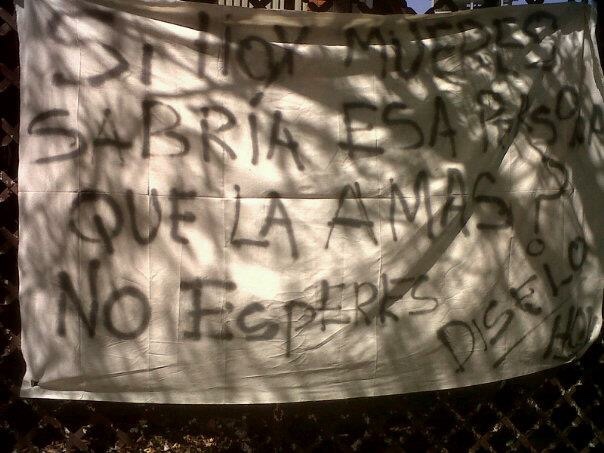
Near my apartment was a house with high walls and bodyguards. Rumors said it belonged to either a prosecutor or a big player in the game. Passing by daily, I wondered if they felt the same fear or even more danger. One day, all the bodyguards were gone, and the empty house had a large cloth at the entrance with text: 

If you die today, would that person know that you love her?

Don’t wait. Tell her today

Despite everything, there remained a chance for love to blossom. When the piece of cloth was finally removed hours later, I couldn’t help but wonder if he had truly told her. We must embrace reality and adapt to its uncertainties, holding tight to each other and moving forward with hearts full of hope. Because hope is the only thing we had those days, that things could change for the better one day. 

Narcopoetry – Monterrey 2010


As time passed, the police presence and bodyguards vacated the large residence, leaving me speculating about the outcome of the potentially tragic incident that occurred. Eventually, it became a distant memory, much like the countless sad narratives surrounding the ongoing war on drugs. From the folds of the Sierra Madre and to the riverbanks of the Rio Bravo, has been perennially marred by violence stemming from human ambition.

In the small northern towns, blood has always been shed – Los Cadetes de Linares

The unseen truth

Monterrey, March 2010

Through life, people tend to focus on what’s near them. They move forward without noticing the crude reality that surrounds them, as if they were horses with blinders following whatever direction the carriage pulls them toward. I was no different. My life drifted without major worries or real problems, deaf to the noise that filled the news and social media. My concerns were trivial; chasing girls at the club, getting drunk at some frat party. I thought that was life; simple, harmless, endless. But reality creeps closer without sound; it waits until it’s too obvious to ignore. Deep down, though, you always know it’s there.

It was late, and the afterparty wasn’t good enough. My throat was dry, the booze was running out, and the pretty brunette I’d spent the whole night talking to wouldn’t give me more than a kiss. Disappointing, but fair. The yuppie friend hosting the afterparty bored me, and it was time to call it a night. My car was parked a few blocks away, and to my drunk self, the idea of walking didn’t seem so bad.

The sky was still dark as I left the apartment complex. The main street was silent, except for a few distant dog barks and the faint rustle of leaves touched by the dawn’s first breeze. I walked without thinking, without caring. My consciousness drifted, blurred by alcohol and fatigue, and for a brief moment, that numbness silenced the questions that usually haunted me who I was, what I was doing questions that never had clear answers anyway.

A block later, I saw it: a black Jeep with tinted windows parked in front of an old abandoned building. Two men stood by it, smoking. Something about them felt wrong. I looked away and kept walking; a fool pretending not to notice.

One of them turned.

“Hey, man, come here and help us with something!” he shouted.

He wore an oversized white shirt, baggy black pants, Jordans, and a Yankees cap straight out of a cliché, but clichés exist for a reason.

“Sorry, man, I’m in a hurry,” I replied, quickening my pace.

He started walking toward me, saying something else, but I didn’t wait to listen I ran.

Two blocks ahead, I saw a police checkpoint. Salvation, or so I thought. I ran harder, my mind sobering with the rush of adrenaline. For an instant, I believed it was over. Then the Jeep roared beside me, tires screeching, cutting me off. The same guy stepped out, shouting:

“I told you to come here, motherfucker!”

He didn’t show a gun or a knife, but I didn’t need to see one to know what came next. I turned and ran again.

All the violence I had heard about the kidnappings, the killings, the disappearances suddenly took shape. It was no longer a story told by someone else. It was here, breathing down my neck. I waved frantically at the road, begging for someone to stop. A taxi did. I jumped in and told the driver to head toward the university; campus security was nearby. For a moment, I thought I’d made it.

Then the Jeep pulled alongside us. Through the window, one of the men yelled at the driver:

“Stop if you don’t want trouble! We just want that bastard!”

Without hesitation, the driver stopped. He didn’t look at me and just unlocked the doors.

“Please, man,” I begged. “The police station’s close. Just drive.”

He met my eyes in the rearview mirror. There was sorrow there, but also fear.

“Sorry, mate. I can’t risk any trouble.”

The men stepped out of the Jeep, moving toward us. My heart pounded, and I knew if they got me, it wouldn’t end well. Fear sharpened my will. I threw the door open, slamming it against one of them, and ran. Ahead, I saw the guard post of an apartment building. A man stood outside, smoking.

“Let me in! Call the police! it’s an emergency!” I screamed.

He hesitated but opened the gate. I rushed inside, slamming it shut as the men yelled, trying to convince him I was a thief. But the guard wasn’t stupid. He looked at me once and knew enough.

He called the police. The men left after a while.

Later, I learned the Jeep was found days after—riddled with bullet holes, floating near the river. Apparently, a bigger fish had swallowed them whole.

For weeks, I couldn’t walk alone without watching my back. The world felt thinner, more fragile. That night stripped away the illusion that life was normal, that danger was something distant, belonging to headlines and strangers. I understood then that ignorance isn’t peace; it’s blindness.

Things could have been worse. They weren’t. I ran with luck… luck that many others in Monterrey didn’t have in those years the years of the war on drugs.

Beyond the desert plateau

Real de Catorce, May 2016

I ride at dawn passing by the peaks which mark the limit of the town, leaving behind our group, leaving behind the familiar into the dusty planes that extend beyond the horizon. The air still fresh from the dying night hits my face as I ride knowing I am going nowhere and my horse gallops at a firm phase through the bushes.

I pass by the old railroad station, far into the plateau, far away from any road. The sun rising up in the clear sky, warming the soil and with it the sounds of the animals hidden in the nature, singing like a coordinated orchestra with a feral touch. There were no signs or men, just the face of nature and its creations dwelling in the bushes and through holes along the soil.

I ride along the high mesas and the ground resounds under my horse hooves and he gallops faster as I slightly press him with my boots. Our blood heated as the sun warmed our skin and our mouths dry up and our breath becomes heavy. I turn into the old hill road and he goes anxious as if he knows our time is coming to an end and I know that what I was seeking to discover in the desert was a think that I’d always knew; that our shadows would never be one again and that my future was beyond the distance under a different sky, in which we will not ride again.

I ride through the old mining compound, silent and abandoned through the times of the revolution and I take down the mounting of my horse and we both drink water from the small pound under the ruins of the old mill. I look at his big brown eyes that seem calm, yet he looks at me quietly as if he know my heart was full with sadness. We stand there without making much sound as the cold breeze of the nearby mountains cools down our bodies and I prepare the mount again to head up into the old road.

We encounter cowboys and their cattle, jeeps full of tourists ready to venture in search of peyote, and later on I hear the bell of the church marking the entrance back into civilization and I ride back to the old hacienda, where my friends and family are having breakfast. I leave the horse at the stable with the other horses and he looks back at me from the fence quiet and still as if he knew we will not ride again, as if he was saying goodbye.

——

Stockholm , July 2018

Goodbye old friend.

¿Cuál camino?

Nos encontramos perdidos, con suspiros largos al escuchar el despertador y pedir que las próximas 10 horas se pasen volando y así poder volver a soñar con lugares lejanos, situaciones que creamos en nuestra cabeza o simplemente en un vacío carente del ruido que nos tormenta cuando estamos atrapados en nuestros autos y cubículos.

Vivimos en un limbo en el que nuestra juventud cada momento se siente más lejos y ese fenómeno tan espeluznante llamado madurar se acerca más de prisa. ¿ Así tendremos que vivir hasta el final? Poco a poco nos damos cuenta como gira el mundo y aceptamos ,como los otros millones en él, nuestro destino de seres creados para producir en un sistema diseñado para consumir, igual nunca falta uno que otro loco que quiere ser diferente y terminado tirado en una esquina o en una comunidad de esas hippies que viven en el bosque.

No vine porque estuviera buscando desesperadamente otra de vida. Cuando la gente me pregunta porque decidí mudarme a Estocolmo, siempre pienso en una respuesta convincente que no me haga sonar como un tercer mundista desesperado ni como un malinchista de esos que te encuentras en facebook. Cada vez que esta conversación se repite sigue una especie de diálogo previamente bien planeado: Hago que cada argumento tenga una congruencia para que haga parecer que las razones por las que dejé la mitad de mi vida atrás parezcan razonables. Que por el nivel de vida, que por las oportunidades de trabajo, que porque me gustan las rubias o porque la ciudad es ni muy grande ni muy chica. Dependiendo de las personas, cada respuesta es escrita en nuestro diálogo previamente a inciarlo. La verdad es que a veces yo no tengo idea de porque me fui tan lejos, porque al principio parecía una idea romántica en la que podría perderme y encontrar el amor de mi vida en una calle de un trayecto aletoriamente elegido en el centro de alguna ciudad Europea como le pasó a Horacio Oliveira (que desgraciadamente no fue aleatorio y fue de momentito) o a lo mejor tan sólo quería volverme tan cosmopolita como al lugar que me moviera y poder cambiar las botas de vaquero y las camisas Wrangler por unos botínes Gant y una gabardina color de camello.

Días de fuego

Sonríes, nos sonreímos, sin dejarnos de mirar y entonces nuestras penas se desvanecen, nuestra razón desaparece, nuestros corazones se calientan, nos acercamos y no dejamos de sonreír, nos sonreímos mutuamente como unos locos, nos miramos y todo a nuestro alrededor se vuelve más tenue, el ruido cambia a un silencio temporal en el que sólo escucho tu corazón y sólo veo tu cara, te paso los dedos por los labios y después entre tu pelo, cruzo caminos a través de él, caminos que ya habían sido trazados, como si mis dedos tuvieran su propia memoria. Nuestros ojos se miran y se acercan, nuestras miradas se encajan una a la otra como si estuvieran conectadas por una cuerda que se vuelve más chica. Las bocas se encuentra e inician a luchar entre ellas, con pequeños roces entre sus labios, como si siguieran una coreografía planeada y se juntan, se muerden suavemente dejando pequeños instantes entre los cuales  pequeños suspiros van y vienen intercambiando el calor que llevamos dentro. Mis manos se deslizan en tu cuerpo al igual que las tuyas en el mío en armonía  y tu pelo cae sobre mi cara como una suave ventisca de primavera en la que siento su olor dulce. Nuestro calor se vuelve uno, se enciende y siento como tu piel arde cuando roza la mía.

Dejamos los imperfectos y las penas arder entre las flamas que nacen cuando nos besamos, como si estuvieran llenas de fuegos artificiales que no dejan de volar en todas direcciones. El “tú”y  el “yo” se vuelve un nosotros y aquello que somos queda en pausa para dejar paso a aquella llamarada en la que nuestros almas se convierten.


Te veo, me ves y las llamas siguen, pero nosotros no las seguimos, las dejamos estar en el fondo de nuestros ojos sin dejarlas explotar, ya que nuestro fuego al prenderse quema todo y no deja espacio a quienes somos, tan sólo a aquello en lo que nos convertimos y una vez extintas nos dejan con las cenizas de lo que momentáneamente podemos ser, mas no aquello que permanentemente somos.